Colophon: The Ionian City of Poets and Horsemen
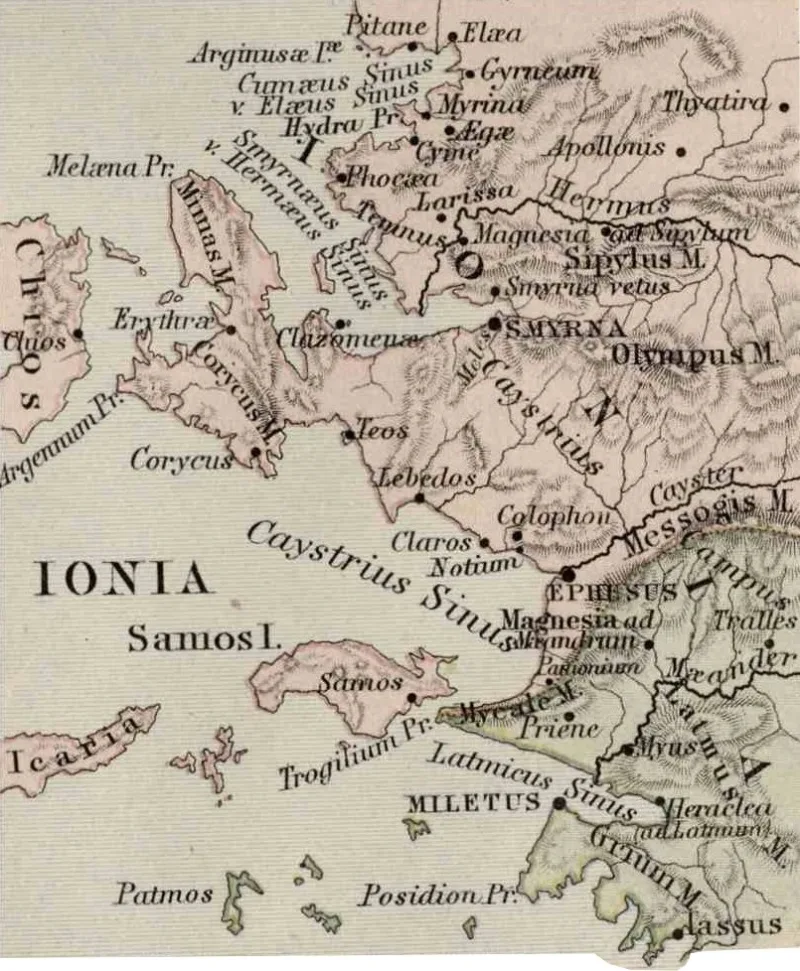
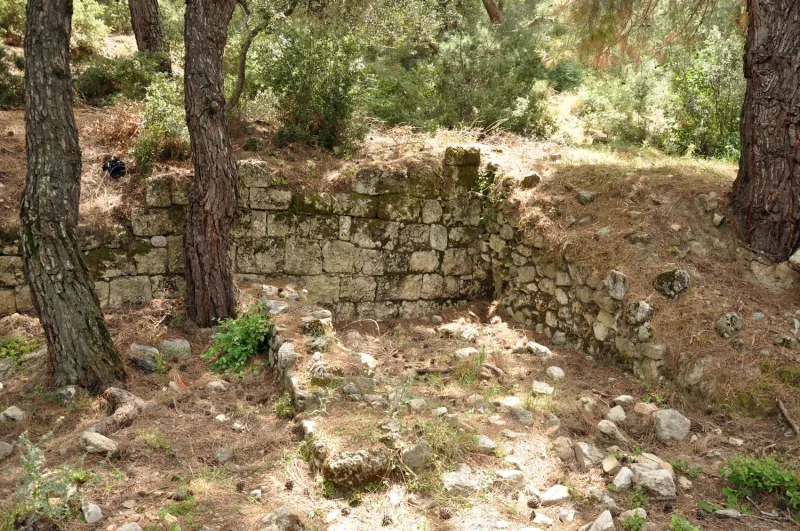
On a hilly ridge south of the modern village of Değirmendere in the Menderes district (İzmir) lie the ruins of Colophon—one of the oldest cities of the Ionian League. Its very name—from the Greek for “peak, ridge”—reflects the terrain: the city stood on a high ridge away from the sea, while the port of Notion and the sanctuary of Claros served it from the coast. In the Classical era, Colophon was renowned for the finest cavalry in Ionia and a lifestyle the Greeks described as luxurious: olives, grapes, and mountain pine, which yielded the very colophony resin used for bowstrings and sails. Today, only modest traces remain of the great polis—defensive walls, foundations on the acropolis, and characteristic terraces—but the historical significance of the site is immense.
History and Origins
According to available data, Colophon was founded at the end of the 2nd millennium BCE and is considered one of the oldest cities of the Ionian League of Twelve Cities. Greek colonists came here from mainland Greece, gradually assimilating the local Anatolian population. The city quickly established a firm place among the Ionian centers: along with Ephesus and Miletus, it sent embassies, participated in pan-Ionian games, and maintained its own fleet.
In the 7th century BCE, Colophon became one of the first victims of Lydian expansion: King Gyges stormed the city, and from that moment on, the slow decline of its political independence began. After the Lydians came the Persians, then the Athenian Naval League, and then the Persians again. In the 3rd century BCE, Lysimachus, one of Alexander the Great’s successors, destroyed Colophon, relocating some of its inhabitants to his new capital—the expanded Ephesus. Unlike neighboring Lebedos, Colophon never fully recovered: the city has existed ever since, but its role has been overshadowed by that of Ephesus.
Colophon gave the world several figures of the first order. According to ancient tradition, the philosopher Xenophanes, a critic of anthropomorphic conceptions of the gods, was born here; the elegiac poet Mimnermus, one of the founders of the love elegy genre; the poet Antimachus, esteemed by Hellenistic philologists; and the Olympic champion wrestler Hermesianax. Later, Colophon was named among the possible birthplaces of Homer—a claim that remains unconfirmed but is indicative of the city’s status.
Architecture and What to See
The Acropolis and Walls
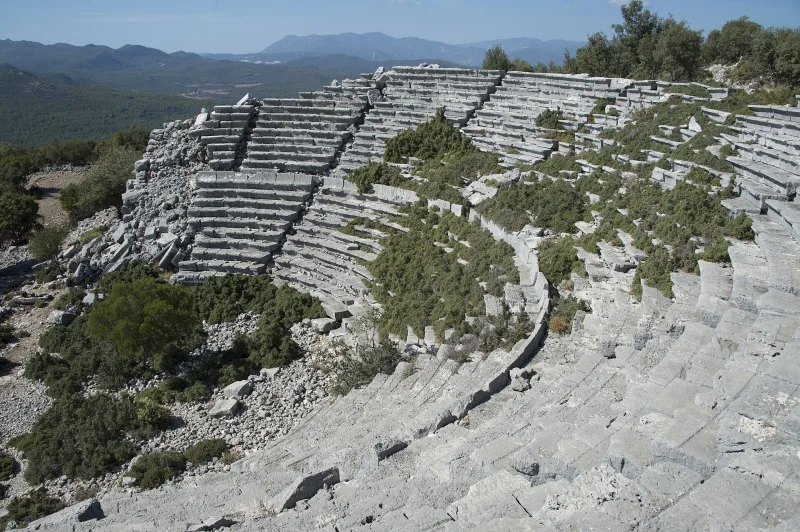
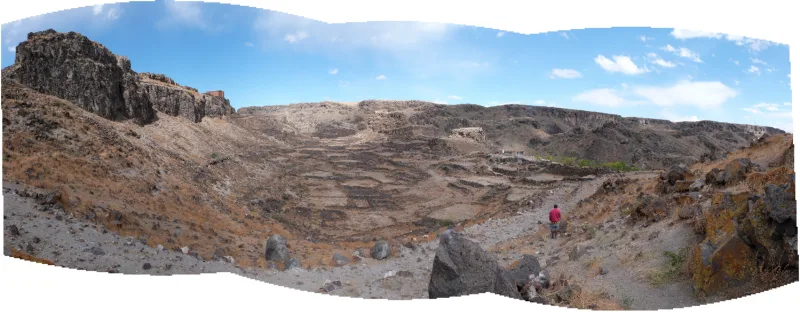
The ancient site occupies an elongated hill above the Halesos Valley. At the summit, the foundations of the acropolis buildings and segments of the fortress walls are visible. Unlike the coastal Ionian cities, Colophon is oriented inland: its walls form a closed perimeter on the crest of the hill. Excavations in the early 20th century (American School of Classical Studies) partially clarified the layout, but a significant portion of the site remains unexcavated.
Notion — the port of Colophon
A few kilometers to the south, right on the coast, lies Notion—a coastal city that served as Colophon’s official harbor. After its destruction by Lysimachus, some of Colophon’s inhabitants relocated to Notion, and during the Hellenistic period, the boundary between the two cities became blurred. Today, Notion is a distinct, well-preserved archaeological site; a visit here naturally complements a trip to Colophon and Claros.
Interesting Facts and Legends
- Colophon resin (colophonia resina)—a word that has survived to this day—originates precisely from here. The resin of the local pine tree has long been used by string musicians and sailors; in modern languages, “rosin” traces back to “Colophon resin.”
- In the Archaic period, the Colophonian cavalry was considered the best in Ionia: “to add Colophon” (Greek: ἐπικολοφωνῆσαι) meant “to settle the matter”—a nod to the role of the Colophonian cavalry in the allies’ victories.
- The city is among the seven contenders for the title of Homer’s birthplace—along with Smyrna, Chios, Colophon, Ios, Argos, Athens, and Salamis (the variant “Seven Cities Dispute Over Homer”).
- The word “colophon” in book printing (the inscription at the end of a book indicating the printer and date) derives from the idea of “summit, conclusion”—the same Greek root.
- After its destruction by Lysimachus, Colophon yielded to most of its neighbors in the alliance. Nevertheless, it remained inhabited during the Roman era; a bishopric existed here until the Middle Byzantine period.
How to get there
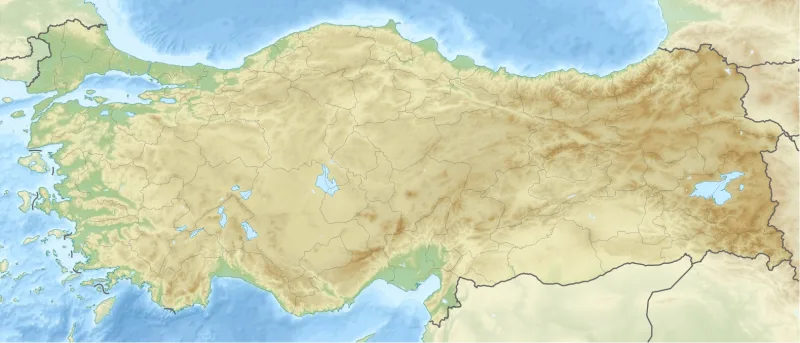
The Colophon site is located south of the village of Değirmendere in the Menderes district of İzmir Province, GPS coordinates: 38.116, 27.142. The nearest airport is İzmir Adnan Menderes (ADB), about 35 km away. The distance from Selçuk (Ephesus) to Colophon is about 30 km along a scenic country road.
The most convenient way is by rental car: the signs to the archaeological site are modest, and finding the entrance without a GPS is not easy. Local dolmuşes run to Değirmendere from İzmir and Selçuk; from there, it’s a 1.5 km walk uphill to the excavation site. A logical one-day itinerary: Ephesus → Notion → Claros → Colophon, all four sites within a 25 km radius.
Tips for travelers
Colophon is for those who prefer “quiet” ruins, without ticket booths, kiosks, or crowds. The climb up the hill is gentle, but in some places the trail disappears into the grass—it’s best to wear closed-toe shoes and long pants (the grass is dry and prickly in the off-season). Bring water: the nearest café is in the village at the foot of the hill.
The best months are April–May and September–October. In summer, it gets very hot on the open ridge, and there is almost no shade. From the top of the hill, there is a view of the valley and the distant seashore—the morning and late afternoon hours are particularly striking for photographers.
Keep in mind that a significant portion of the city remains unexcavated: what visitors will see are the outlines of walls, fragments of foundations, and the archaeological landscape. To understand the context, it makes sense to first visit the İzmir Archaeological Museum, which houses finds from Colophon, Notion, and Claros, and only then head to the site.